
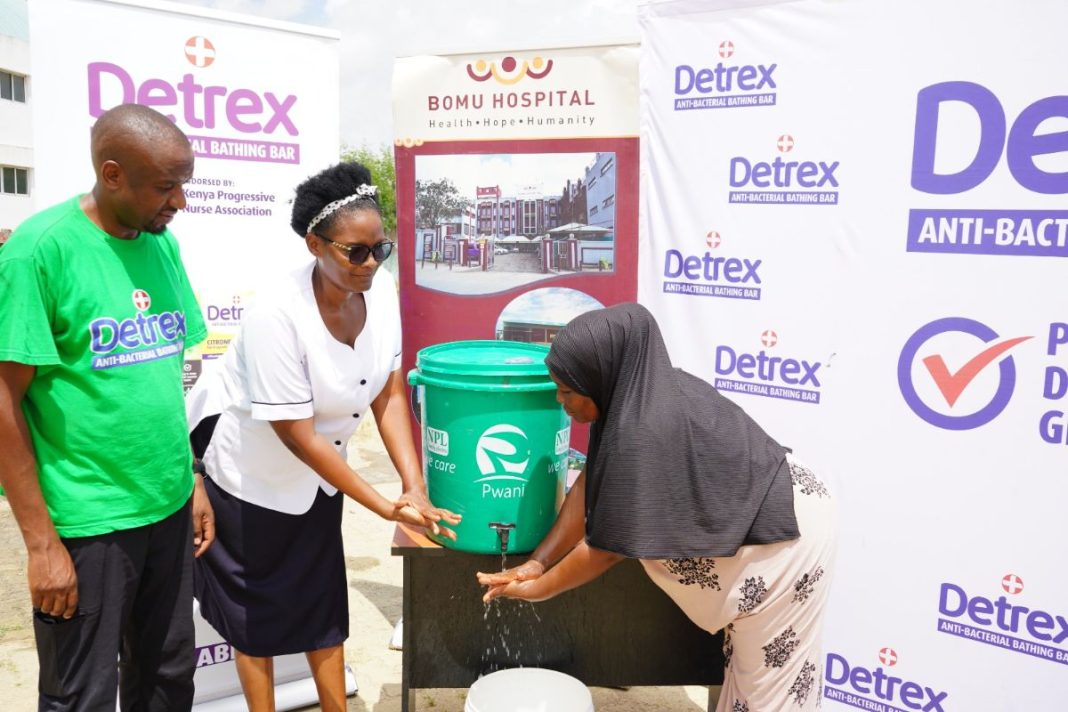
In a practical response to chronic water shortages along the Kenyan coast, a community hygiene initiative supported by Detrex and Kenya Progressive Nurses Association (KPNA) is presenting the first line of defence against diseases.
The programme, which took place at Bomu Hospital, educated more than 200 women and children on effective hand washing techniques and disease prevention, even where water is severely limited.
Participants also received hygiene kits to support household-level prevention of waterborne diseases and infections, which remain a major risk for young children in the region.
Community health workers reinforced the sessions with discussions on disease prevention, maternal responsibility and child health.
Mariakani, like many fast-growing settlements along Kenya’s coastal corridor, faces chronic water scarcity. Health workers note that such conditions significantly raise the risk of waterborne diseases and skin infections, particularly among children under five.
In such environments, hygiene education must be adapted to scarcity rather than ideal conditions.
“Hand washing remains one of the most cost-effective public health interventions available, yet it is often underestimated,” said Rajul Malde, the commercial director at Pwani Oil Products Limited, which manufactures Detrex.
“What we saw in Mariakani was genuine engagement, with mothers already understanding the risks, and only requiring practical tools and consistent support,” added Malde.
“We demonstrated how to wash hands properly, even when water is limited, because that is the daily reality for these families. When mothers see that good hygiene is still achievable, it leads to real behaviour changes,” said KPNA’s Triza Ireri.
Community health workers involved in the initiative noted that trust was a key factor driving participation. Detrex had previously engaged health workers in similar outreach programmes, thus the ability to build on existing credibility rather than start from scratch.
“People listened because they recognised us,” said one community health worker. “When hygiene messages come from familiar faces and are backed by practical support like soap, they move from theory into daily habit.”
“The lesson from Mariakani is that if we are serious about healthier communities, hygiene has to be treated as a shared responsibility involving families, healthcare providers and industry,” concluded Malde.


